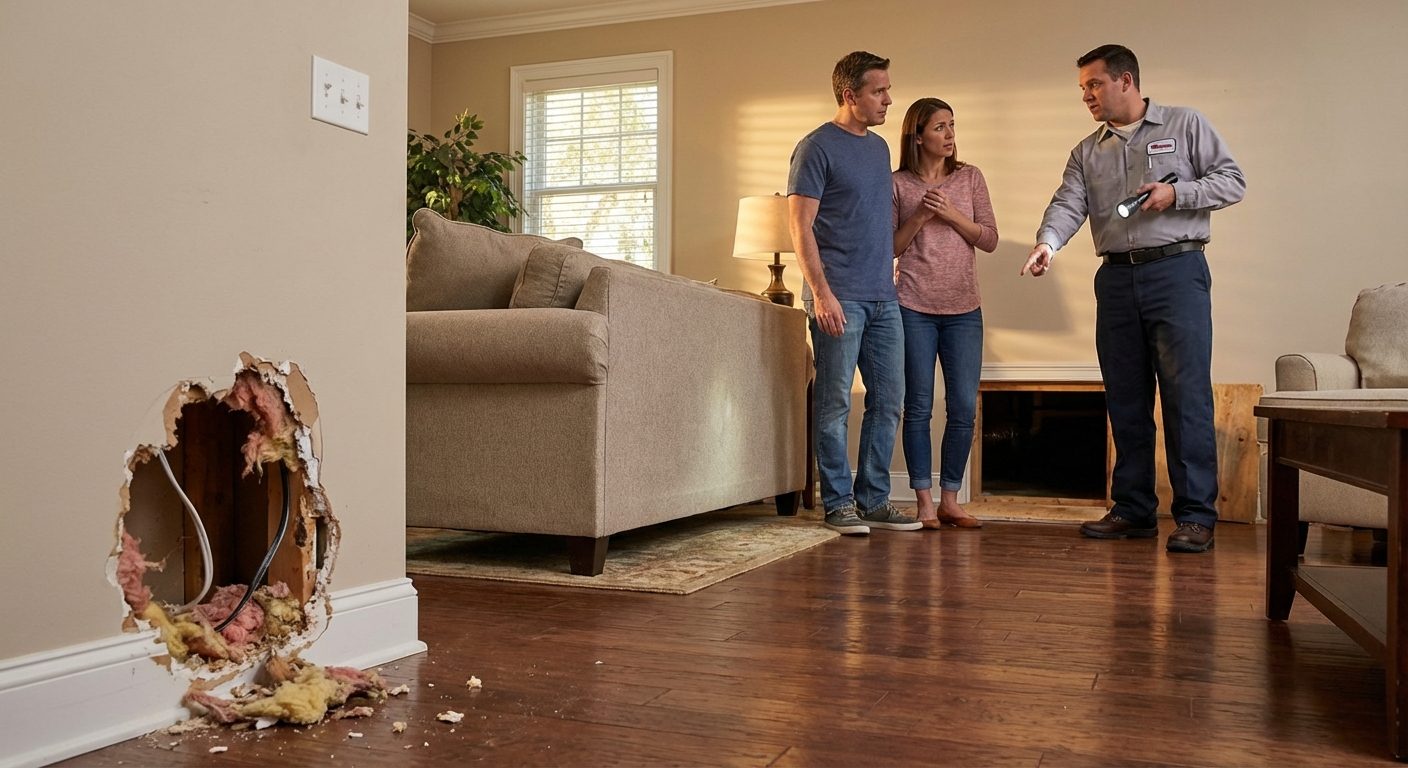
The Warning Signs They Missed
Sarah and Michael noticed a few tiny droppings in their kitchen pantry on a Tuesday morning. They laughed it off—probably just a mouse, nothing serious. They'd dealt with pests before. A quick sweep, some traps, problem solved. Or so they thought.
Within three weeks, the situation had spiraled into something they never anticipated.
What Started as Nothing
The couple had purchased their dream home six months earlier—a charming 1970s colonial in the suburbs. It was perfect: hardwood floors, updated kitchen, a backyard that caught the evening sun just right. They were living the dream until those first droppings appeared.
"We honestly didn't think much of it," Sarah recalls. "We set some traps, sealed a few gaps we found. We figured we'd caught it early."
But they hadn't.
The droppings continued appearing, now in different locations. Behind the refrigerator. Under the sink. In the basement corner where they stored holiday decorations. What had seemed like an isolated incident was actually a signal—one they'd dangerously misread.
The Escalation Nobody Expected
By week four, the smell hit them. A musty, acrid odor that seemed to emanate from the walls themselves. Michael investigated the attic and discovered the horrifying truth: what they'd assumed was a single mouse problem was actually a full-blown infestation of roof rats.
The damage was extensive. Insulation shredded. Electrical wires gnawed—a serious fire hazard. Droppings everywhere. The infestation had been quietly multiplying for months, possibly even before they'd moved in.
"We felt sick," Sarah admits. "How had we not noticed? Why didn't we call someone immediately?"
The Cost of Waiting
Emergency pest control came out the next day. The exterminator's assessment was sobering: this would require multiple treatments, structural repairs, and professional decontamination. The bill exceeded $8,000—and that was just the beginning. Insurance didn't cover pest damage, and the psychological toll of living in a compromised home was immeasurable.
The couple spent two weeks at a hotel while the initial treatment phase occurred. They couldn't sleep properly. Every sound in their new home became a source of anxiety.
What They Should Have Known
The truth that pest control professionals emphasize repeatedly: early intervention is everything. Those initial droppings weren't "nothing." They were a critical warning system that the couple had dismissed.
Common early signs homeowners overlook include:
- A few scattered droppings (often dismissed as insignificant)
- Gnaw marks on packaging or wood (attributed to "normal wear")
- Unexplained musty odors (blamed on old houses)
- Occasional scratching sounds in walls (dismissed as settling)
- Small holes in walls or foundations (overlooked during busy schedules)
Each of these signs represents an opportunity to stop an infestation before it becomes catastrophic.
The Turning Point
After three months of treatments and repairs, Sarah and Michael finally felt their home was safe again. But the experience had changed them fundamentally.
"We learned that 'probably nothing' in pest control usually means something," Michael says. "We wish we'd called a professional that first week. It would have cost maybe $200 instead of thousands."
Today, they schedule quarterly pest inspections—not because they have an active problem, but because they never want to repeat that nightmare. They've also become vocal advocates among their friends, warning anyone who notices even minor pest activity to act immediately.
Why This Matters to You
This isn't just Sarah and Michael's story. Pest infestations affect millions of homeowners annually, and the pattern is remarkably consistent: early warning signs are ignored, situations escalate rapidly, and by the time action is taken, the damage is severe.
The difference between a minor inconvenience and a major catastrophe often comes down to a single decision made in the first week.
If you've noticed anything unusual in your home—droppings, sounds, odors, or damage—don't assume it's nothing. That assumption could cost you thousands of dollars and months of stress.
The professionals are clear on this point: when it comes to pests, there's no such thing as "probably fine." There's only action or consequences.