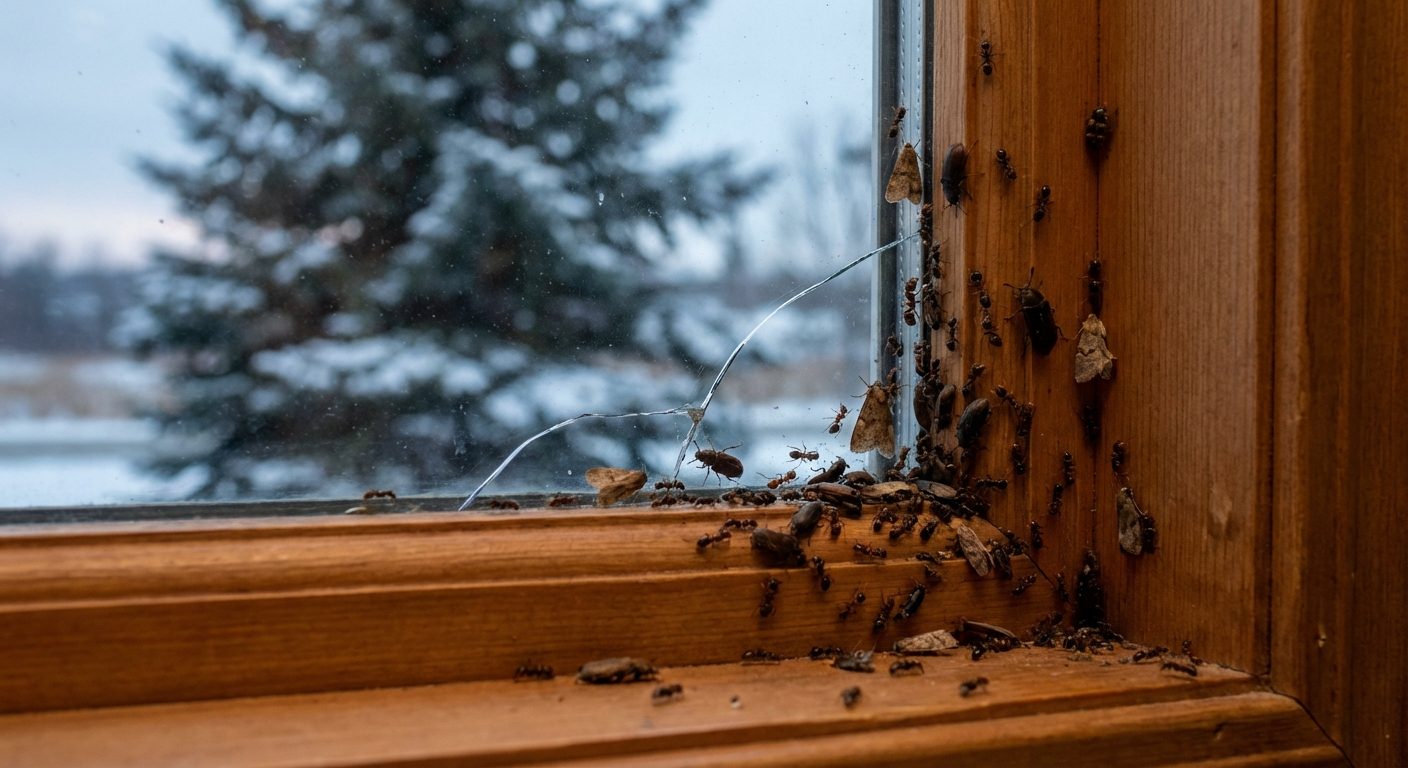
The Unexpected Invasion: Why Your Home Might Be Next
You wake up at 3 AM to find something crawling across your pillow. Not a spider. Not a cockroach. Something you've never seen before in your Canadian home. You're not alone—and what's happening is far more widespread than anyone anticipated.
Across Canada, from Vancouver's suburbs to Toronto's downtown condos, homeowners are reporting an alarming surge in pest sightings that defy traditional patterns. These aren't just the usual seasonal invaders. They're appearing in places where they've never thrived before, at times when they shouldn't even be active, and in numbers that have pest control professionals genuinely concerned.
A Silent Shift in the Ecosystem
The change started subtly. A few unusual reports here and there. But as 2023 and 2024 progressed, the frequency escalated dramatically. Social media groups dedicated to pest identification exploded with posts from bewildered Canadians. What was once an isolated incident in one province began appearing across multiple regions simultaneously.
"We're seeing species expanding their ranges at unprecedented rates," explains Dr. Sarah Chen, an entomologist at the University of British Columbia. "The patterns we're observing don't match historical data. That's what makes this genuinely unsettling."
The culprits vary. Some homeowners discovered bed bugs in areas that hadn't seen infestations in decades. Others found invasive cockroach species thriving in Canadian winters. Mosquito species typically found in the southern United States have been documented as far north as Alberta. Even more disturbing: some pests are appearing during months when they should be completely dormant.
The Climate Connection Nobody Wanted to Admit
The elephant in the room is impossible to ignore anymore. Warmer winters and extended fall seasons are fundamentally reshaping where pests can survive. Canada's average temperatures have risen faster than the global average, and that shift is measured in degrees that mean everything to cold-sensitive insects.
A single degree of warming might not sound significant to humans. To a pest species teetering on the edge of survival in a Canadian winter? It's the difference between extinction and explosive population growth.
"We used to have natural population controls built into our climate," notes Dr. Marcus Williams, a pest management specialist. "Those controls are failing. The question isn't if we'll see more pests. It's how many more, and how quickly."
The Domino Effect Nobody's Talking About
Here's where the situation becomes genuinely alarming: once a pest establishes itself in a new region, eradicating it becomes exponentially harder. Local pest control services lack experience with unfamiliar species. Treatment protocols that work in warmer climates often prove ineffective in Canada's unique conditions. And by the time authorities recognize a problem, the population has often already spread beyond containment.
The cost implications are staggering. Individual homeowners are spending thousands on treatments. Municipalities are scrambling to develop response protocols. Agriculture Canada has quietly increased funding for pest monitoring programs—a clear signal that official channels recognize this as a serious threat.
What Makes This Different (And Why It Should Concern You)
Previous pest surges were predictable. They followed patterns established over decades. Exterminators knew what to expect, when to expect it, and how to handle it. This current wave? It's breaking every established rule.
Pests are:
- Appearing in unexpected locations where they have no historical presence
- Active during dormant seasons when they should be hibernating
- Showing resistance to conventional treatment methods
- Spreading faster than regional response systems can manage
- Establishing permanent populations in areas once considered too cold for survival
The Personal Impact: It's Already Happening
Consider these real scenarios from across Canada:
A family in Calgary discovered an infestation of a tropical cockroach species—something that would have been impossible a decade ago. A homeowner in Montreal found bed bugs returning every six months despite professional treatment. A farmer in Saskatchewan reported crop-damaging insects appearing two months earlier than historical records suggest they should.
These aren't isolated anomalies. They're the new normal.
What Authorities Aren't Saying Directly
While pest control companies and entomologists acknowledge the trend publicly, there's a notable reluctance to discuss the full scope of what's coming. Interviews with regional health authorities reveal a pattern: they're monitoring, they're concerned, but they're not yet ready to launch public awareness campaigns.
Why the hesitation? Partly because the situation is still evolving. Partly because there's no clear solution. And partly because acknowledging the full extent of the problem would require admitting that our traditional pest management infrastructure is inadequate for what's ahead.
The Window of Opportunity (It's Closing)
Interestingly, experts point to a narrow window where intervention could still slow this trend. Early detection and rapid response to new infestations in new regions could prevent establishment. But that requires public awareness, funding, and coordination that hasn't materialized yet.
"We have maybe 2-3 years before some of these populations become impossible to control at a regional level," one anonymous pest management official told us. "After that, we're managing an endemic situation, not preventing one."
What You Can Actually Do
The uncertainty is maddening—and that's precisely what makes this situation so compelling. We don't know exactly which pests will establish themselves next, where they'll appear, or how quickly they'll spread. But that uncertainty also means individual vigilance matters more than ever.
- Document unusual pests: Report sightings to local health authorities and university entomology departments
- Seal entry points: Even small gaps can become highways for invasive species
- Monitor seasonally: Be alert during months when specific pests shouldn't be active
- Connect with neighbors: Share information about local pest trends
- Stay informed: Follow regional pest alerts and scientific updates
The Bigger Picture
What's happening to Canada's pest ecosystem isn't just an inconvenience or a minor public health concern. It's a visible, tangible manifestation of how quickly environmental shifts can cascade through interconnected systems. The pests appearing in your walls today are tomorrow's indicator of how much our world is actually changing.
And unlike climate change debates or abstract environmental discussions, this one is immediate, personal, and increasingly unavoidable. You can see it. You can feel it. You can find it crawling across your pillow at 3 AM.
That's what makes it real. That's what makes it urgent. And that's why more Canadians are suddenly paying attention.