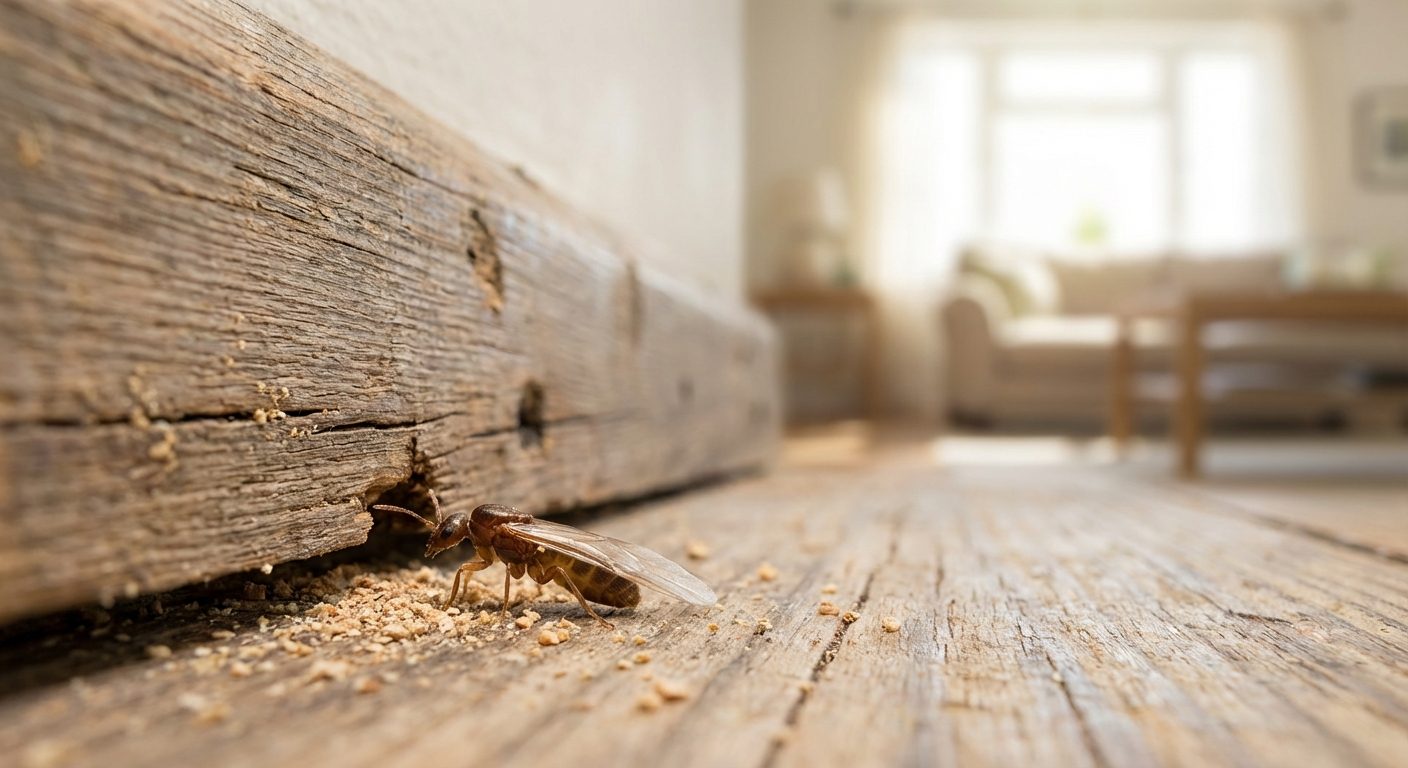
The Silent Destroyer Hiding in Your Walls
You might have seen it before—a small, wood-colored insect no bigger than a grain of rice, crawling across your basement floor or along a wooden beam. You probably thought nothing of it. Maybe you even let it go, assuming it was just another harmless household bug.
But what if I told you that this tiny creature is responsible for billions of dollars in property damage every single year across North America alone?
Why Homeowners Keep Missing the Warning Signs
The problem isn't that these pests are hard to spot—it's that they're too good at hiding. They work silently, often for months or even years, before you notice anything is wrong. By then, the damage is already catastrophic.
Here's what makes them particularly dangerous: unlike other household pests that leave obvious signs of their presence, these insects operate in darkness. They tunnel through wood from the inside out, leaving the surface completely intact. You could have a structurally compromised beam holding up your entire roof, and you'd never know it just by looking at it.
The homeowners who discover the problem too late often face repair bills ranging from $3,000 to $30,000+—and in severe cases, much worse.
The Escalating Problem Most People Don't Anticipate
What starts as a single insect entering your home through a crack or gap can quickly multiply into a colony of thousands. Once established, these creatures don't just eat wood—they consume it with alarming efficiency. They target the most critical structural elements:
- Foundation support beams
- Floor joists and subfloors
- Roof trusses and rafters
- Window and door frames
The frightening part? Your home's structural integrity could be compromised long before you see any visible damage. Insurance companies know this, which is why most homeowner policies don't cover pest-related damage. You're on your own.
The Race Against Time
Every day an infestation goes undetected is another day of damage accumulating behind your walls. The longer you wait, the more expensive the problem becomes. And here's the catch—these pests are most active during specific seasons, meaning the window to catch them early is narrower than you think.
Property owners who act quickly often spend a fraction of what others pay in repairs. Those who wait? They end up spending tens of thousands.
What You Need to Know Right Now
The first step is understanding what you're actually dealing with. These pests thrive in moist environments and are attracted to wood that's already slightly damaged or damp. If your home has:
- Poor drainage around the foundation
- Leaky gutters or downspouts
- Cracks in the foundation
- Damp crawl spaces or basements
...you're already at higher risk than you realize.
The good news? Early detection and prevention can save you from catastrophic damage. But you have to know what to look for—and most homeowners simply don't.