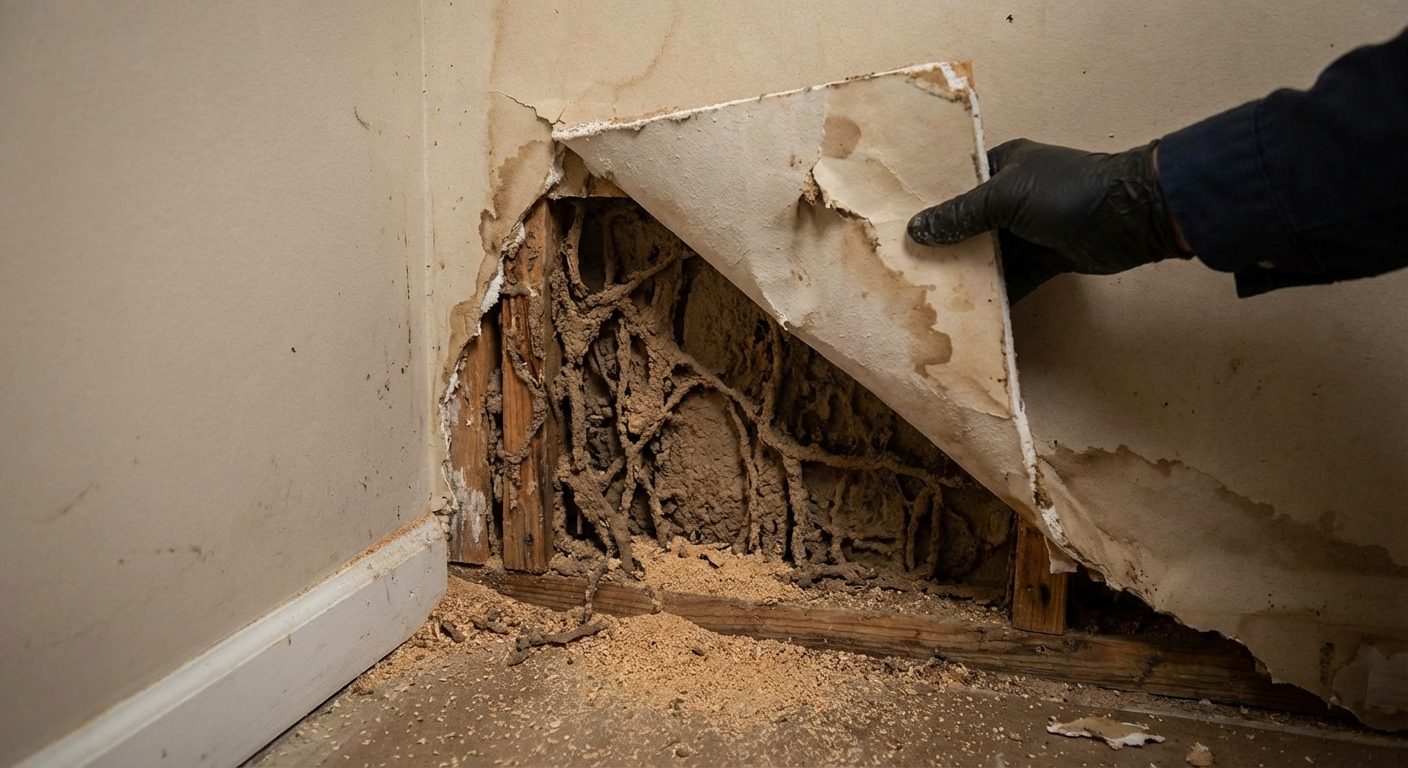
The Unexpected Discovery That Changed Everything
Sarah had lived in her suburban home for fifteen years without a single pest-related incident. The house was clean, well-maintained, and nestled in a quiet neighborhood where such problems seemed unlikely. So when the real estate agent insisted on a routine home inspection before listing the property, she almost cancelled the appointment.
"It's just a formality," she thought, glancing at her calendar.
That decision—to keep the appointment—would unveil something that had been hiding in plain sight all along.
What the Inspector Found
The morning sun filtered through the kitchen window as the certified inspector began his methodical walkthrough. He moved through rooms with practiced efficiency, checking foundations, testing outlets, examining the attic. Everything seemed normal until he paused in the basement, his flashlight hovering over a section of wooden beam.
"When was the last time you had this area treated?" he asked, his tone suddenly serious.
Sarah's stomach tightened. She couldn't remember ever having anything treated down there.
What followed was a revelation that shattered her sense of security: a thriving termite colony had been silently consuming the structural integrity of her home for an estimated five to seven years. The damage was extensive but, fortunately, still manageable—had it gone undetected for much longer, the repair costs would have escalated into the tens of thousands of dollars.
How It Happened Without Anyone Noticing
The most unsettling aspect wasn't the termites themselves—it was how thoroughly they'd operated undetected. These wood-eating insects are nature's silent saboteurs:
- They work behind the scenes: Termites eat wood from the inside out, leaving thin outer shells intact. The damage is invisible until it's severe.
- They're attracted to moisture: Sarah's basement had a slight moisture issue she'd never considered a real problem. For termites, it was an invitation.
- They multiply exponentially: A single colony can contain hundreds of thousands of individuals, each contributing to the destruction.
- They don't announce themselves: Unlike carpenter ants or bed bugs, termites leave minimal visible signs until structural damage becomes apparent.
The Warning Signs She Missed
Looking back, Sarah realized there had been subtle clues:
- Faint clicking sounds in the walls (termites communicate by banging their heads)
- Tiny mud tubes along the foundation
- A slightly warped section of baseboard in the basement
- An odd, musty smell she'd attributed to normal basement dampness
Each sign, taken individually, seemed insignificant. Together, they painted a clear picture she'd simply overlooked.
Why This Matters for Every Homeowner
This story isn't unique to Sarah. The National Pest Management Association reports that termites cause more than $5 billion in property damage annually across North America—damage that insurance typically doesn't cover. What makes this particularly troubling is that infestations often go undetected for years, allowing damage to compound silently.
The difference between catching a pest problem early and discovering it during a home inspection can mean the difference between a $3,000 treatment and a $30,000+ structural repair.
What You Should Do Right Now
If you're a homeowner, the time to act is before a crisis forces your hand:
- Schedule a professional inspection if you haven't had one in the past 3-5 years
- Address moisture issues immediately—fix leaks, improve drainage, and ensure proper ventilation
- Seal entry points—caulk cracks, gaps, and openings where pests can enter
- Keep wood away from soil—mulch, firewood, and lumber should be stored away from your foundation
- Monitor your basement and crawl spaces regularly—look for the warning signs Sarah missed
The Silver Lining
Sarah's story has an encouraging ending. The termite treatment was completed within two weeks, the structural repairs were manageable, and her home's value wasn't compromised. More importantly, she now understands that vigilance—not panic—is the homeowner's best defense.
The routine inspection she almost cancelled became the most valuable appointment of her year. Sometimes, the problems we don't see are the ones most worth looking for.