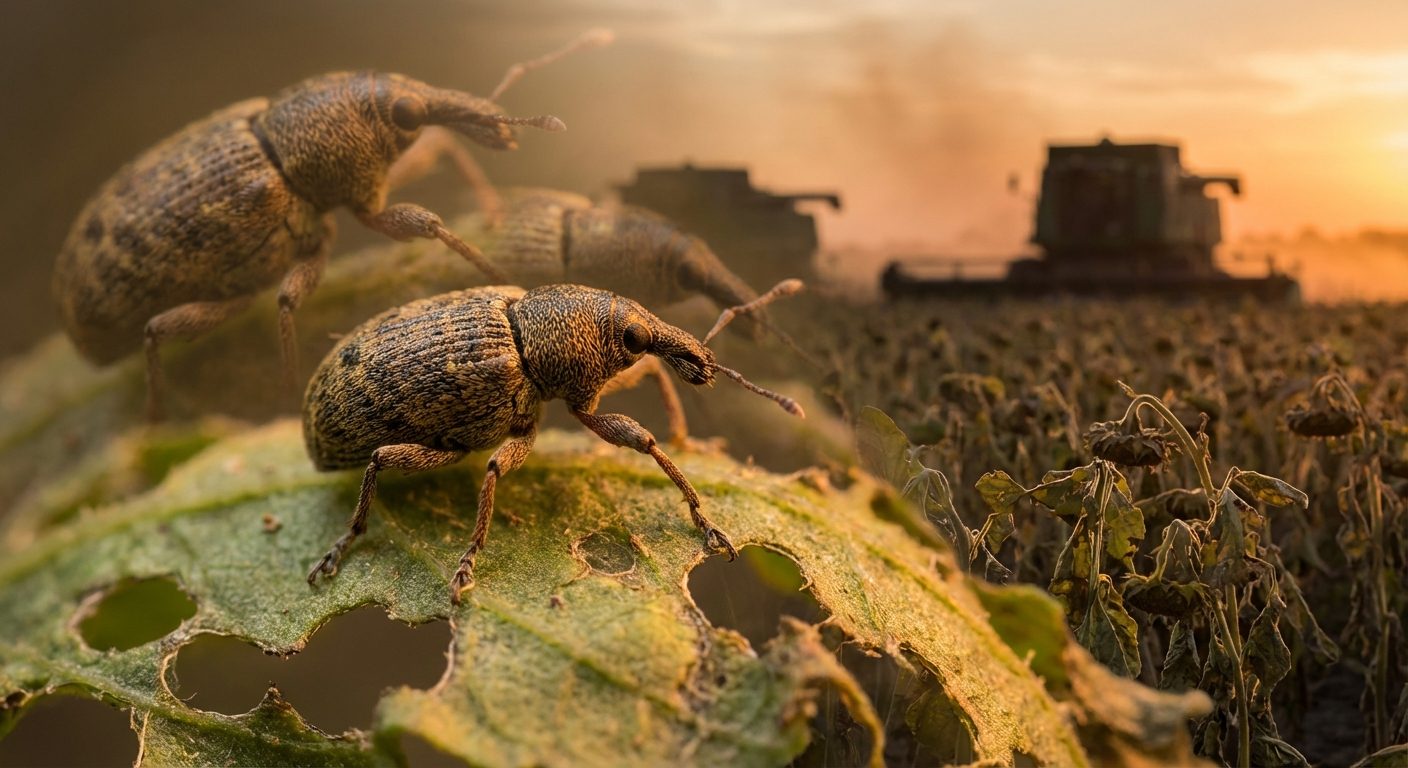
The Adaptation Crisis Nobody Saw Coming
You wake up to find your crops devastated overnight. A farmer in Iowa experiences the same thing. Then another in Brazil. By the time scientists understand what's happening, it's already too late—a pest has evolved beyond every defense we've thrown at it.
This isn't science fiction. It's happening right now, and researchers are sounding the alarm.
How Fast Can Evolution Really Move?
For decades, scientists operated under a comfortable assumption: pests would take generations to develop resistance. We had time. We had strategies. We had chemical weapons in our agricultural arsenal that would keep infestations at bay for years, maybe decades.
That timeline has collapsed.
A recent study from agricultural research institutions across North America and Europe reveals something deeply unsettling: certain pest populations are adapting to our pest management techniques in real-time—sometimes within a single growing season. Not in the way we expected. Not at the pace our models predicted.
The data is staggering. Some insect populations have shown resistance development 10 to 15 times faster than historical patterns suggested. Entomologists are struggling to explain why.
The Perfect Storm of Adaptation
The culprit? A combination of factors converging at once:
Massive population sizes mean more genetic variation. More variation means higher chances that some individuals possess natural resistance genes.
Intensive monoculture farming creates ideal conditions for rapid selection. When millions of acres grow the same crop, a single resistant individual can spawn billions of offspring—all carrying the same survival advantage.
Climate change is accelerating generational cycles. Warmer winters mean fewer die-offs. Longer growing seasons mean more breeding opportunities. What used to take three generations now takes one.
Our own tactics may be backfiring. Rotating pesticides, a strategy designed to prevent resistance, might actually be speeding up adaptation by exposing populations to multiple selection pressures simultaneously.
Why This Matters More Than You Think
If you eat food—and you do—this affects you.
When pests develop resistance faster than we can develop countermeasures, crop yields plummet. Food prices rise. Agricultural regions that depend on specific crops face economic collapse. Farmers forced to use higher pesticide concentrations create environmental damage that takes decades to reverse.
But there's something more troubling beneath the surface: we're running out of new pesticides. Developing a new chemical takes 10-15 years and costs hundreds of millions of dollars. If pests are adapting in a single season, we're caught in a race we're losing.
What Scientists Are Actually Saying
Dr. Eleanor Hartmann, lead researcher at the International Institute of Crop Research, puts it bluntly: "We're witnessing evolution in fast-forward. The pest populations we're seeing now are fundamentally different from those of five years ago. And frankly, we don't have a clear strategy for what comes next."
The concern isn't just academic. Agricultural extension offices are reporting farmers reverting to banned pesticides out of desperation. Others are abandoning crops entirely. Some regions are seeing multiple pest species simultaneously develop resistance—a scenario that was considered virtually impossible just a decade ago.
The Adaptation Nobody Predicted
What's most unsettling is the mechanism behind this rapid evolution. It's not just that resistant individuals are surviving—it's that they're surviving faster than our models account for.
Genetic studies suggest some populations may be activating dormant genes or engaging in horizontal gene transfer (sharing beneficial genes across species boundaries). If confirmed, this would mean pests aren't just adapting through natural selection—they're actively acquiring new survival strategies.
The research is still preliminary. The findings are contested. But the pattern is unmistakable.
What Happens Next?
Agricultural scientists are pivoting toward integrated pest management strategies that don't rely solely on chemical resistance. Genetic modification of crops, biological controls, and precision agriculture technologies are all being accelerated.
But here's what keeps researchers up at night: even these solutions require time to develop and implement. And time is the one resource pests have in abundance right now.
Some experts are calling for a complete reimagining of how we approach agriculture. Others warn that without immediate action, we could see significant food security crises within the next 5-10 years in vulnerable regions.
The pest isn't just adapting faster than expected. It's adapting faster than our entire system can respond.
And we're only beginning to understand why.