The Silent Warnings Your Property Is Sending You
You walk into your office on a Tuesday morning, and something feels off. You can't quite put your finger on it—nothing obvious has changed. Yet experienced pest control professionals would have already spotted at least three red flags that most people completely miss.
These aren't the obvious signs like seeing a cockroach scurry across your kitchen floor or finding droppings in your pantry. The real professionals are trained to detect the whispers before the infestation becomes a scream. And here's what's unsettling: by the time you notice something is wrong, the problem has often been brewing for weeks.
The Early Detection Methods Professionals Use
1. Subtle Odor Changes
Before an infestation becomes visible, it announces itself through smell. Pest control experts immediately notice:
- Musty, sweet odors that signal rodent urine accumulation
- Oily, pungent smells indicating cockroach colonies
- Ammonia-like scents from bed bug infestations
The average person attributes these to old buildings or poor ventilation. Professionals know better.
2. Structural Damage Patterns
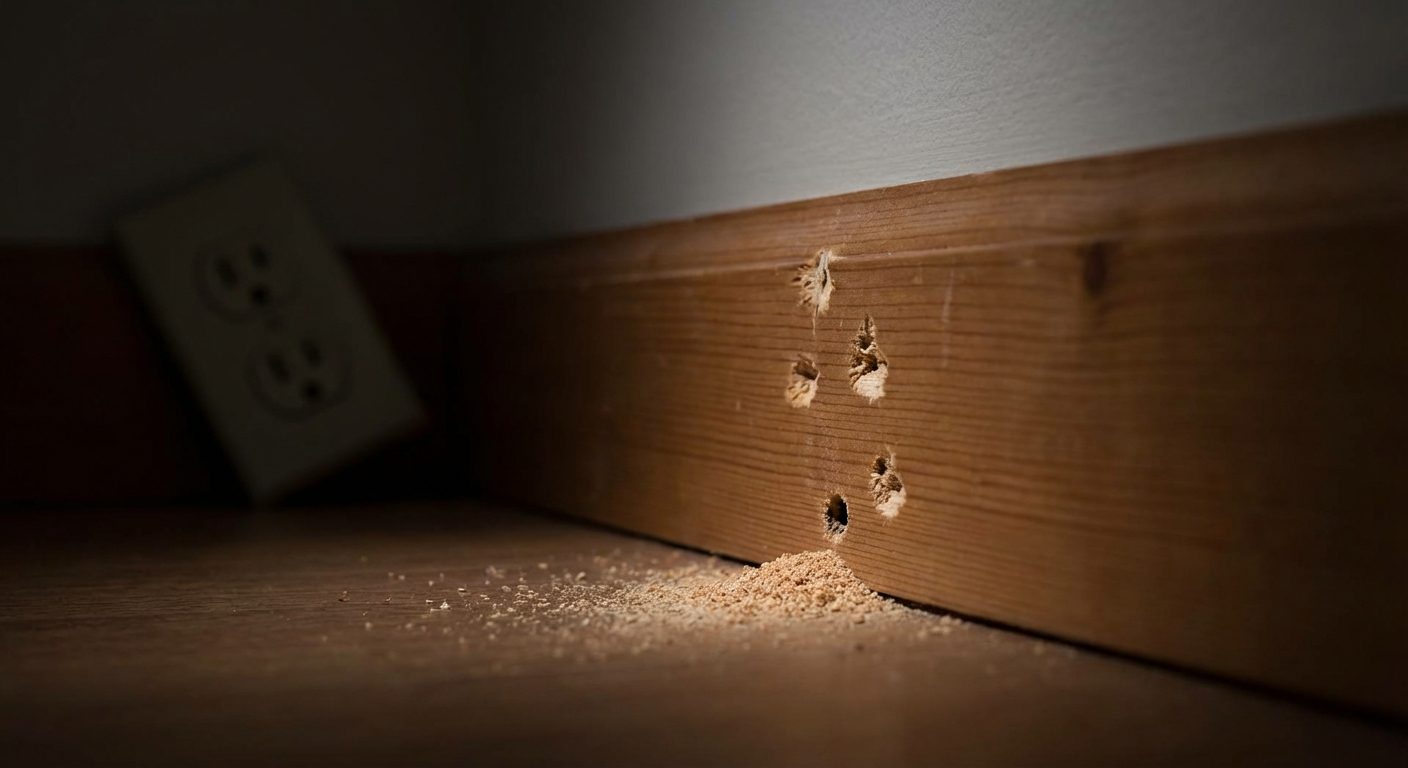
Long before wood-destroying pests cause catastrophic damage, trained eyes spot:
- Small entry holes (often smaller than a pencil tip) in baseboards and walls
- Sawdust-like frass (insect droppings) near wooden structures
- Soft spots in wood that feel slightly compressed when pressed
- Paint bubbling or warping along walls and ceilings
These signs can appear 6-8 weeks before major structural damage occurs.
3. Behavioral Clues in Your Pets
Your cat or dog might be trying to tell you something:
- Unusual scratching or biting at specific areas
- Sudden disinterest in certain rooms
- Nervous behavior near walls or corners
- Excessive drooling or attempts to catch invisible insects
Professionals ask about pet behavior because animals sense infestations humans miss.
4. Droppings in Strategic Locations
Not the obvious droppings—the strategic ones:
- Small, dark specks along baseboards (rodent droppings)
- Tiny brown dots near light sources (bed bugs)
- Pellet-shaped waste in corners and under appliances
- Clustered droppings suggesting recent activity
The location tells professionals where the infestation is concentrated and how advanced it is.
5. Moisture Patterns That Don't Make Sense
Pests need water. Professionals scan for:
- Unexplained damp spots on walls or ceilings
- Condensation in unusual places (like inside cabinets)
- Water stains that suggest pest activity pathways
- Mold growth appearing suddenly in specific areas
These moisture signs often precede visible pest activity by 2-3 weeks.
6. Unusual Sounds at Specific Times
This is where it gets eerie. Professionals listen for:
- Scratching sounds in walls during quiet hours (typically 2-4 AM)
- Clicking or tapping sounds in wooden structures
- Rustling noises coming from attics or crawl spaces
- Squeaking sounds that appear and disappear mysteriously
Most people hear these and assume it's just the house settling.
The Timeline Nobody Talks About
Here's what professionals know that keeps them ahead of infestations:
Week 1-2: A few scouts enter your property. No visible signs yet.
Week 3-4: Odors become detectable to trained noses. Droppings appear in hidden areas.
Week 5-6: Structural damage begins. Pet behavior changes noticeably.
Week 7-8: Visible signs emerge. By now, the population has multiplied exponentially.
Week 9+: Full-blown infestation. Professional intervention becomes significantly more expensive and time-consuming.
What Professionals Do When They Spot These Signs
When experienced pest control experts detect early warning signs, they:
- Identify the pest species through evidence analysis
- Determine the infestation stage and population size
- Locate entry points before they become highways
- Assess structural vulnerability to prevent future invasions
- Recommend preventative treatment before escalation
The cost difference between early intervention and late treatment? Often 300-500% more expensive once the infestation is visible to the untrained eye.
Your Action Plan Starting Today
Don't wait for the obvious signs. Professionals recommend:
- Monthly inspections of basements, attics, and crawl spaces
- Immediate action if you notice any of the subtle signs listed above
- Documentation of suspicious activity (photos, dates, locations)
- Professional assessment at the first hint of unusual odors or sounds
- Seal entry points before seasonal pest migrations
The Bottom Line
The professionals who catch infestations earliest aren't necessarily the most experienced—they're the most observant. They understand that pests operate on a predictable timeline, and that timeline offers a narrow window of opportunity for prevention.
Your property is constantly communicating its pest status. The question is: are you listening?